



Lipka for Portal ETV: Everything Montenegro achieved would have been impossible in a union with Serbia

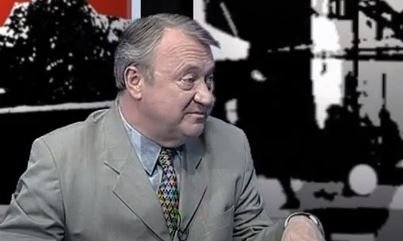
Former Slovak Ambassador to Podgorica and President of the Republican Commission for the Preparation of the Referendum on the State-Legal Status of Montenegro in 2006, František Lipka, speaks with Portal ETV about the significance of May 21, the political changes that followed after 2020, and Montenegro’s European future. Twenty years after the restoration of independence, Lipka assesses that the referendum was a historic turning point that opened the path for Montenegro toward democratic development, NATO membership, and European integration, but warns that in recent years both the civic character of the state and its pro-Western orientation have been seriously called into question. Speaking about European Union membership, he believes that 2028 is not a realistic deadline and that the key breakthrough will depend on a future, genuinely pro-European government after the 2027 elections.
PORTAL ETV: How do you look today at the day Montenegro restored its independence? How significant was that event and why?
LIPKA: I view May 21, 2006 today in the same way I did back then - as the day when Montenegro peacefully restored its independence through a democratic referendum. At that moment, it demonstrated its democratic maturity and democratic character.
Today, after two decades, I am even more aware of the significance of the referendum. Of course, its greatest importance was the restoration of independence, but the full significance of that event for Montenegro only became evident during the years that followed. The referendum opened a new chapter in Montenegrin history and enabled the country to shape its own future.
After restoring independence, Montenegro turned toward itself and launched reforms that gradually changed the image and character of the state: it built a civic and multiethnic society; established good relations with its neighbors, which had been damaged during the 1990s; adopted a new state program that defined Montenegro’s entry into the community of Western democratic states and shared values through Euro-Atlantic integration as its main strategic goal. It subordinated its domestic, regional, and foreign policy, as well as its geopolitical orientation, to that goal.
That demanding objective was partially achieved: Montenegro became a member of NATO, and today it is in the final phase of the accession process to the European Union.
None of this would have been possible within a joint state with Serbia.
PORTAL ETV: What do you think about Montenegro today, 20 years after the restoration of independence?
LIPKA: In my previous answer, I described a positive image of Montenegro. However, in recent years that image has changed in many respects. After the elections in August 2020, there was not only a change of government, but also a change in state policies.
Nationalist and retrograde political forces are once again reopening identity issues, attempting to destabilize the multiethnic society. There are efforts to replace the civic concept of society with an ethnic one, to change the character of the state and challenge the result of the referendum, as well as to alter the country’s geopolitical orientation.
The result of such policies is growing tension within society, increasingly weaker institutions, and an ever more unstable state. Instead of moving closer to the value standards of the European Union, Montenegro is increasingly returning, both in values and mentality, to the Balkan past.
However, the laws of physics also apply in politics. History always unfolds in alternating amplitudes. Montenegro is no exception.
PORTAL ETV: Is Montenegro ready for membership in the European Union? In your opinion, when could it become a member of the Union? Is 2028 realistic?
LIPKA: I think 2028 is not realistic. It is unrealistic to expect Montenegro to close another 19 negotiation chapters by the end of this year, meaning within only seven months. It is even less realistic that it will close the remaining chapters during 2027, as is already being announced from Brussels.
Godina 2027. biće izborna godina i uoči parlamentarnih izbora, tokom izborne kampanje, niko se neće ozbiljno baviti evropskom agendom. Nakon izbora, cio proces će čekati formiranje nove vlade.
Had the Government of Montenegro rid itself in time of political landmines unrelated to the accession process but unnecessarily obstructing it; had it included the opposition and all segments of society in time; had it fulfilled at least part of the Copenhagen democratic criteria - Montenegro might have been able to complete negotiations within the planned deadline. However, today it is already too late and there is not enough time.
But even closing all negotiation chapters within the envisaged timeframe would not in itself open the doors to the European Union. The main problem lies in the area of adopting common European values, and it is precisely in this area that Montenegro has the greatest deficit.
We are in a paradoxical situation: on one hand there is limited technical progress, and on the other stagnation, or even regression, in adopting value-based criteria, particularly in the field of the rule of law in the broadest sense of the term.
That is why I do not believe that some liberal-democratic member states of the European Union would sign, or ratify, an accession treaty with a country whose government does not fully share the Union’s common values, thereby taking upon themselves the risk that a new member state might one day become a “Trojan horse” for foreign interests.
In my opinion, Montenegro’s accession process with the European Union will only be completed by a new government formed after the elections in June 2027 - provided that it is genuinely pro-European and fulfills all remaining technical and value-based obligations.
In that case, Montenegro could become a member of the European Union by the end of this decade or the beginning of the next one, specifically in 2030 or 2031.