



Picula: It is wrong to suggest that Montenegro’s EU accession depends solely on Zagreb’s demands
Podgorica must be aware that the final stage of negotiations is also the most sensitive phase, when it should expect clearer demands and stronger resistance from those it is negotiating with - Picula stressed

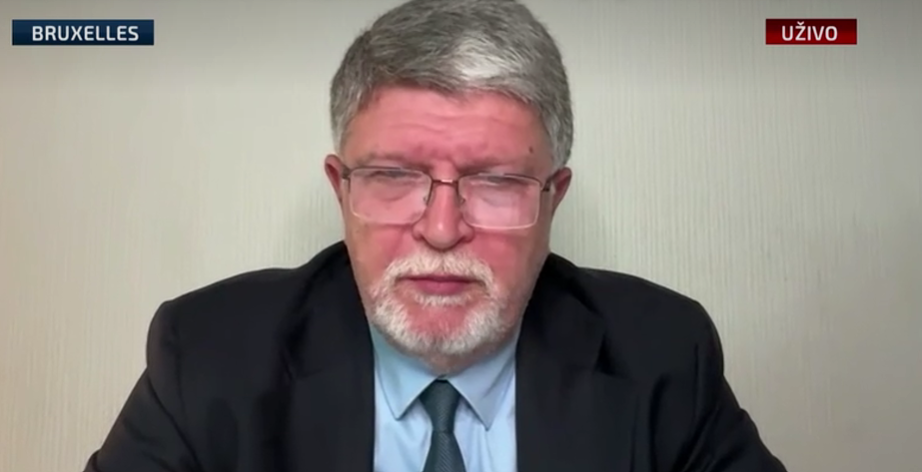
Croatian Member of the European Parliament Tonino Picula said that Montenegro’s accession to the European Union (EU) does not depend solely on whether Zagreb abandons its demands or adapts them to geopolitical circumstances. Domestic political developments and the situation in France could also pose significant obstacles.
Speaking on N1, Picula noted that Montenegro was on the very threshold of the European Union and that this was an achievement that should be supported rather than downplayed. However, he warned that outstanding issues with Croatia must be taken seriously.
- Unresolved issues at the very final stage of accession negotiations are not insignificant. Missing persons, accountability for war crimes and the rights of the Croatian community are not matters of petty nitpicking, but are part of the values on which the EU itself is founded, and Podgorica must address them seriously. Croatia went through a difficult accession process and knows how important it is for the process to be predictable and fair - Picula stressed.
According to him, the best policy towards Montenegro is one that resolves outstanding issues through dialogue, rather than leaving negotiation chapters closed for too long without a clear path towards resolution.
- Podgorica must be aware that the final stage of negotiations is also the most sensitive phase, when it should expect clearer demands and stronger resistance from those it is negotiating with - Picula stressed.
Asked whether Montenegro’s EU accession was a strategic objective for Croatia as a means of reducing external influence, Picula said that Croatia would be able to benefit from all the advantages of EU membership once all its neighbours eventually joined the Union, although, as he noted, this would not happen any time soon.
- As far as Montenegro is concerned, Croatia certainly has geopolitical interests in seeing the country join the EU. However, we should not create a false impression that Montenegro’s accession depends solely on whether Zagreb abandons certain demands or adapts them to geopolitical realities. There are other problems that are not being discussed at the moment. France could prove to be the real problem for Montenegro. Important elections will take place in that country next year, and Marine Le Pen is currently leading by a considerable margin. She holds rather hard-line views on how the EU functions, including its enlargement. In France, a referendum would have to be organised, or a complicated procedure to avoid one would have to be followed in the National Assembly, requiring the support of three-fifths of its members. France will determine how realistic the goal of making Montenegro the EU’s 28th member state by 2028 is - a slogan that originated in Montenegro itself - Picula explained.
He identified another problem as the renewed deterioration in relations between Montenegro’s government and opposition, following a boycott of the parliamentary vote on the dismissal of Parliament Speaker Andrija Mandić by the ruling coalition.
- The problem is not limited to Zagreb. The picture is somewhat more complex, and Podgorica must take that into account and must not waste time - Picula concluded.