



Đukanović: This is a politically motivated continuation of the persecution that began on 30 August 2020, I will prosecute everyone who abused state institutions
And I am beginning to find some of this rather amusing, although I do not believe it is particularly amusing or rational for the country we live in. What is being done now is a caricature-like attempt to revive an issue that has already been addressed by the position taken by the Special State Prosecutor’s Office, in a manner that is causing serious damage, because, as I have said, it undermines the Constitution and the constitutional separation of powers in Montenegro - Đukanović stated

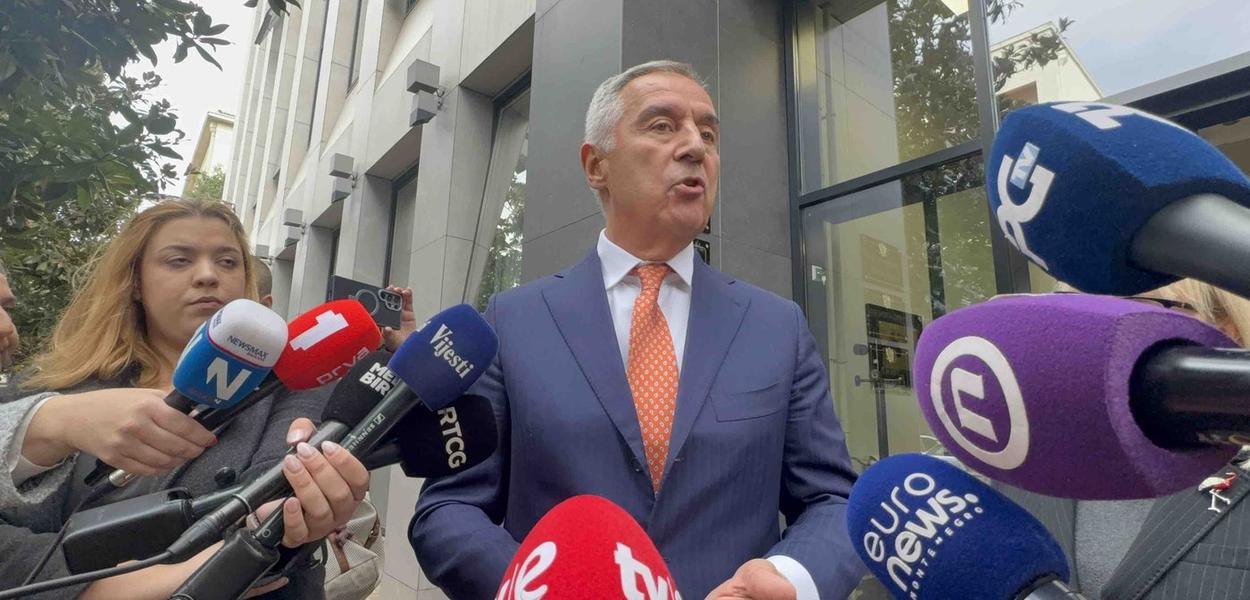
I responded to the summons this time as well, despite having a strong impression that this is an abuse of the court. I believe this is a politically motivated continuation of a politically motivated campaign against a political platform that established a different course, based on European values - former Montenegrin President and Prime Minister Milo Đukanović said after being questioned before an investigating judge at the High Court in Podgorica in connection with proceedings concerning the 2005 privatisation of Telekom.
According to him, this course of action undermines one of the fundamental constitutional principles - the separation of powers - and marks the beginning of a new practice in the judiciary.
- Because the Government, as the executive branch, is attempting to assume the powers of an independent prosecution service and undermine the independence of the courts. This is anything but a practice aimed at building Montenegro on European values. It is an attempt to manufacture grounds for continuing the persecution that began on 30 August 2020. I see this as completely irresponsible and unserious political conduct. For 30 years, I tried to pursue a policy that was meant to serve Montenegro’s recovery and development as a civic state, founded on the rule of law and European standards. What is happening now is the exact opposite - Đukanović stressed.
He said he was deeply convinced that the country had to go through that phase, since it was only natural for the need to give someone else an opportunity to govern to emerge.
- I consider that desirable in any democratic society. I believe all of this is approaching its end, and when that end comes, I will initiate criminal proceedings against everyone who attempted to, and succeeded in, abusing the state and its institutions - in this case, the judiciary. Whether I am a former president, a former prime minister or neither, my rights, just like those of every other Montenegrin citizen, are guaranteed and must be protected by a state with authority - Đukanović said.
According to him, he is beginning to find the whole situation somewhat amusing.
- I just do not believe it is particularly amusing or rational for the country we live in. What is being done now is a caricature-like attempt to revive an issue that has already been addressed by the position taken by the Special State Prosecutor's Office, in a manner that is causing serious damage because, as I have said, it undermines the Constitution and the constitutional separation of powers in Montenegro - Đukanović stated.
Former Montenegrin President and Prime Minister Milo Đukanović said that the 2005 privatisation of Telekom had been carried out fully in accordance with Montenegrin legislation and international standards, adding that he was prepared to accept responsibility if any evidence of wrongdoing were found.
Following his questioning earlier today before Goran Šćepanović, an investigating judge at the High Court in Podgorica, Đukanović said he did not regard the dismissal of the criminal complaint filed by the Network for the Affirmation of the NGO Sector (MANS) on the grounds of the statute of limitations as a favour done to him by the Special State Prosecutor’s Office.
On the contrary, he argued that the prosecution service had had sufficient time to examine all the circumstances surrounding the privatisation of Telekom and establish whether any laws had been violated, rather than closing the case by invoking the statute of limitations.
He recalled that in August 2025, just a day or two after the public learned that the criminal complaint had been dismissed, he published an opinion piece setting out his position on the case.
- If anyone thinks I was done a favour by the dismissal of the criminal complaint on the grounds of the statute of limitations, I personally do not accept that view - Đukanović said.
He pointed out that MANS had filed the criminal complaint back in 2019, meaning that the prosecution service had had six years to verify the allegations and reach a conclusion as to whether any unlawful conduct had taken place.
He believes that precisely such a determination was never made, leaving room for further controversy over the privatisation.
- Whoever had the opportunity, between 2019 and 2025, to examine every detail of that criminal complaint and determine whether or not the law had been violated by anyone failed to do so. Not to my benefit. Because had that been done, we would not be here today, and you would not be raising this question - Đukanović said.
„If you find evidence of a violation of the law, I am prepared to accept responsibility“
Speaking about the privatisation of Telekom itself, and responding to journalists' questions about whether he or individuals from his political circle had benefited from the transaction, he said the process had complied with both the domestic legal framework and international standards.
- I can state with full responsibility that the process was carried out in complete accordance with Montenegro’s constitutional and legal system, as well as with the very demanding international democratic and legal standards - Đukanović stressed.
He noted that extensive documentation existed regarding the preparation and implementation of the privatisation, which should be held in state archives and could be used to verify the legality of the entire process.
Đukanović said there was no reason to conceal anything and that he was prepared to bear responsibility if it were established that any laws had been violated during the privatisation.
- If anything resembling a violation of the law is found, let alone the acceptance of a bribe, I am prepared to accept responsibility even without a trial - Đukanović said.
He emphasised that he was convinced no such evidence existed.
The former president called on journalists to examine the available documentation on the Telekom privatisation themselves and verify his claims against the facts, rather than accepting his statements without independent scrutiny.
Đukanović also rejected interpretations of documents issued by US authorities in 2011, which referred to consultancy agreements suspected of having been used to bribe Montenegrin officials and a member of the family of a senior state official.
Responding to a journalist's question about these allegations, he insisted that the content of the American documents had been misrepresented to the public for years.
As evidence, he cited documentation from proceedings held before a court in New York in 2013. According to him, the US Securities and Exchange Commission (SEC) informed the court at the time that some of the previously raised corruption allegations actually concerned the privatisation of Telekom in Macedonia, rather than in Montenegro.
Đukanović claims that, following this clarification, allegations of corruption linked to Montenegro’s privatisation were omitted from subsequent proceedings before the US court.
- Look for yourselves. Do not take my word for it. You will not find that in the so-called American papers - Đukanović said.