



Western Balkans between disputes and integration: Unresolved issues swept under the rug threaten to become a serious problem

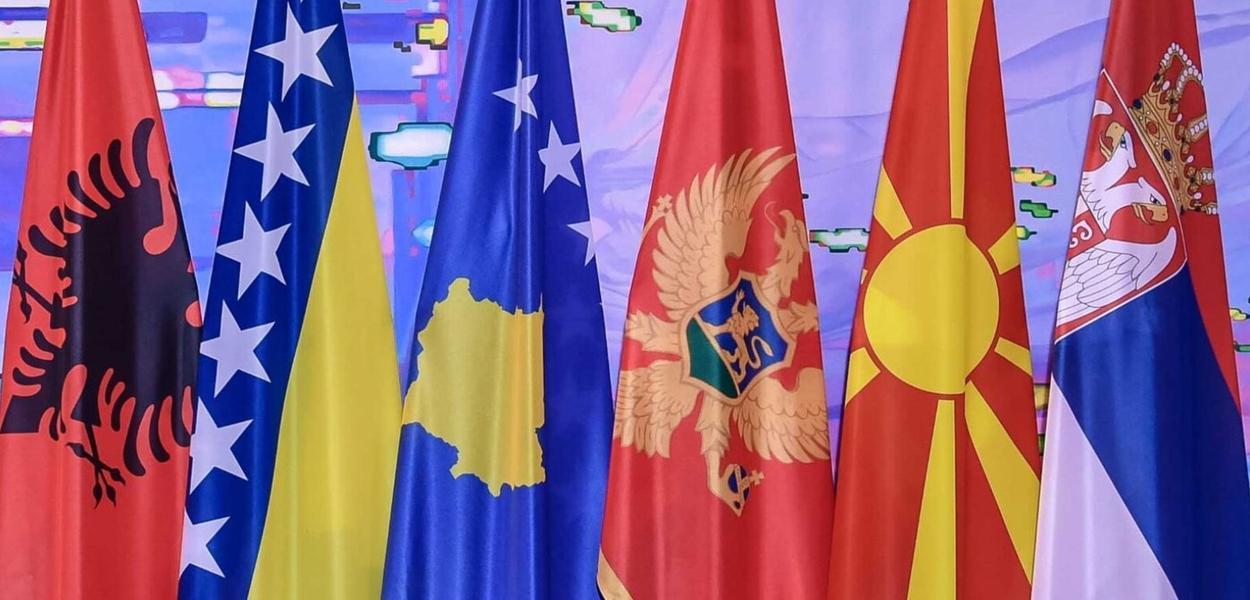
Although the European Union (EU) has decided that disputes with neighbors cannot be brought into membership, the principle of good neighborly relations (GNR) often becomes a tool through which existing tensions between member states and candidate countries are politicized. Additionally, unresolved issues between states that are swept under the rug for the sake of accession and maintaining domestic peace risk becoming serious problems at some point.
This is shown in an extensive analysis by the Center for Democratic Transtition (CDT) of interstate relations, that is, unresolved issues between Western Balkan countries that are at some stage of EU accession.
- This principle is one of the fundamental principles of the EU, and it has carried particular weight since 2005, when the Negotiating Framework for Croatia explicitly stated that its progress toward the EU would depend on its commitment to good neighborly relations and the resolution of border disputes in accordance with the principles of peaceful dispute resolution from the United Nations Charter, including, where necessary, the jurisdiction of the International Court of Justice. At that time, Croatia had a border dispute over the Bay of Piran with Slovenia, which was already a member, and that dispute became the first in history to influence the course of negotiations. This was also the first EU mediation in such cases. However, resolving this dispute was not a condition for Slovenia’s accession to the EU, while Croatia was explicitly required to resolve it, which shows that the EU has not consistently applied the principle of resolving bilateral issues – said editor-in-chief of the Raskrinkavanje.me portal, Darvin Murić, discussing the findings of the analysis.
However, he notes that it was only the 2018 Western Balkans Strategy that explicitly elevated good neighborly relations to a „must“, making them a necessary condition for membership, with the message that the EU would not allow the „import“ of disputes.
At that time, Murić recalls, the European Commission clearly identified good neighborly relations and reconciliation as „preconditions for accession“ and stated that the EU „cannot and will not import bilateral disputes“, emphasizing that countries in the region must resolve them urgently.
With whom have we resolved border issues?
It is clear, Murić notes, that the principle of good neighborly relations carries significantly greater weight in the Western Balkans than in any previous round of enlargement.
- Especially when we consider the wars of the 1990s, the nationalism inherited from that period, and the fact that a significant number of state leaders and ruling parties have roots in that era, maintaining narratives and policies that involve using disputes with neighbors to create enemies for domestic political purposes - he pointed out.
Unlike Central European countries that joined during a period of stabilized borders and consolidated democracies, Murić states that the countries of the region still carry the burden of the breakup of Yugoslavia and the wars of the 1990s.
- The legacy of ethnic conflicts, „frozen conflicts“, and identity disputes, unresolved border issues, and the status of minorities make the Western Balkans a region where the principle of good neighborly relations is not only a political criterion but also a prerequisite for the sustainability of statehood and long-term stability - he added.
One of the most current political topics is the negotiations between Montenegro and Croatia on unresolved issues such as ownership of the training ship „Jadran“, establishing facts about wartime events, and the border at Prevlaka. There are also certain technical issues with Bosnia and Herzegovina, Albania, and Kosovo that are being resolved constructively, while Montenegro also has unresolved disputes with Serbia.
- Regarding Prevlaka, the status quo is ensured by the Protocol on the Temporary Regime along the southern border between Croatia and the then Federal Republic of Yugoslavia (whose legal successor is Montenegro), and the agreement is that the dispute should be resolved before the International Court of Justice or through ad hoc international arbitration with mutual consent on its mandate. The border agreement with Bosnia and Herzegovina, signed in 2015, successfully resolved the long-standing dispute over Sutorina, while the European Commission’s 2024 report notes that the physical demarcation of the border has not yet been completed. The agreement on border demarcation with Kosovo has also been ratified, although it triggered internal political tensions and strong protests in Priština. Montenegro considers that dispute closed. The border with Albania functions stably in practice, while remaining technical issues related to its formal regulation are being resolved through regular bilateral cooperation - Murić stated.
According to him, it is interesting that, despite Serbia recognizing Montenegro and the two countries maintaining diplomatic relations, a border demarcation agreement has never been signed.
He recalls that since 2013, Montenegro has repeatedly initiated negotiations on demarcation, but meetings have never taken place. The issue, Murić explains, is Kosovo, specifically that authorities in Belgrade view the demarcation between Montenegro and Kosovo within the broader context of their stance on Kosovo.
- Despite this, relations between Montenegro and Serbia function in practice without incidents along the border, and cross-border cooperation, trade, and freedom of movement proceed smoothly. The borders and cross-border cooperation between Montenegro and Kosovo are equally functional - he emphasized.
Identity issues more difficult than border ones
In addition to drawing lines between states, Montenegro and neighboring countries also face the resolution of numerous identity issues and questions stemming from the wars.
Murić recalls that bilateral relations between Montenegro and Serbia since 2006 have been marked by a constant interplay between formally correct cooperation and deep identity tensions.
- In a significant part of the Serbian national corpus, both in Serbia and Montenegro, Montenegrin sovereignty has never been fully accepted but is instead perceived as a temporary episode in the breakup of the „common state“. This is clearly reflected in Serbia’s strategic documents, which explicitly define it as the parent state of all Serbs in the region and single out Montenegro as a foreign policy priority, with goals of ensuring „fair representation“ of the Serbian people in institutions - he said.
He also recalls that identity and historical issues once again destabilized relations between Montenegro and Croatia after Podgorica adopted a resolution on the genocide in Jasenovac in 2024, which provoked a strong reaction from Zagreb and led to a serious cooling of bilateral relations. Additionally, the position of the Croatian minority in the Bay of Kotor has become a sensitive bilateral issue.
- Therefore, it is clear that the principle of good neighborly relations enables EU member states to condition aspiring countries, which, for example, could mean that if Montenegro becomes the next EU member, it may have a stronger position in resolving disputes with Serbia, Albania, or any other candidate. And where there is room for conditionality, there is also room for political misuse - Murić concluded.