



Spajić: By increasing the coefficient calculation value from 90 to 100, we will prevent many inconsistencies and secure significant pay rises
The minimum wage is only a starting point from which additional pay grades need to be established, taking into account years of service and other factors. This will be achieved by increasing the coefficient calculation value from 90 to 100. We have agreed to this, together with the trade unions, and are now waiting for employers to respond. If this happens, the discrepancy between, for example, a newly qualified teacher and an experienced teacher will be significantly reduced - Spajić said

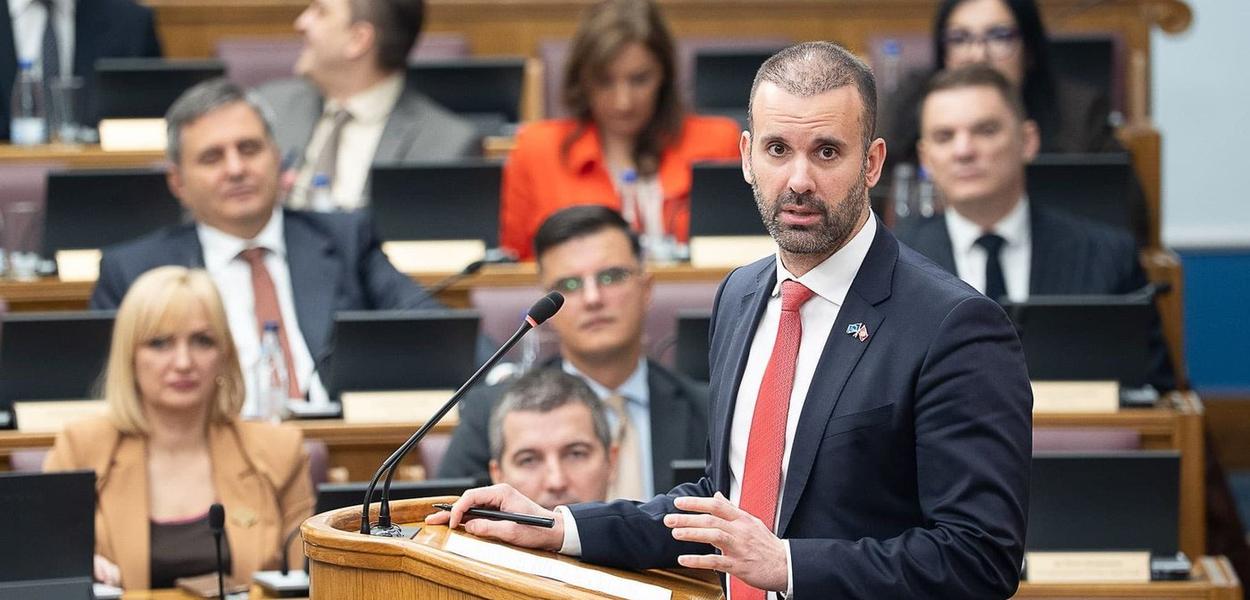
Increasing the coefficient calculation value from 90 to 100 will prevent many of the inconsistencies that would otherwise arise and lead to a significant increase in the earnings of citizens whose salaries are already above the minimum wage - Prime Minister Milojko Spajić said in response to a question from New Serbian Democracy MP Vuk Todorović about whether years of service would be taken into account when calculating salaries under the proposed „Euro Model“.
Spajić stressed that many citizens have legitimate reasons for raising this question.
-We will continue discussions within the framework of social dialogue with trade unions and employers - first separately with the trade unions. The position of both the state and the trade unions is that the coefficient calculation value should be increased from 90 to 100. This would prevent many of the inconsistencies that would otherwise arise and result in a significant increase in the earnings of those citizens whose salaries are above the minimum wage. This is precisely why the claims made by those who argue that, following the introduction of the Euro Model, there would be no point in increasing the coefficient calculation value are incorrect. Citizens whose salaries are close to, or exceed, the future minimum wage will benefit, as this will make it possible to establish proper pay grades and maintain the balance in terms of years of service and many other factors that definitely need to be taken into account - Spajić said.
He believes that, in this respect, the Government and the trade unions are on the same page.
- We will also talk to employers to hear their concerns. We would like this issue to be resolved by the New Year. That would be very helpful, because increasing the coefficient calculation value from 90 to 100 would also lead to a significant increase in pensions starting in January. Since salaries would increase, pensions would also rise considerably. We will therefore make every effort to help employers take a step forward and accept the proposed increase in the coefficient calculation value. We will work intensively towards that goal. This is a classic issue for social dialogue, where we cannot impose the will of the executive branch but must work together, in coordination with the trade unions, to find the best possible solution - Spajić said.
„A more humane way of financing pensions“
Independent MP Radinka Ćinćur raised the issue of the long-term sustainability of the pension system and the position of employees with decades of work experience under the announced Euro Model, which envisages abolishing pension insurance contributions and increasing salaries.
- There has been a great deal of discussion about the Euromodel, which envisages increasing employees’ salaries at the expense of pension insurance contributions. I will address in Parliament the question of how fair it is to take away from those who have contributed for years in order to secure a pension for themselves once they stop working. Let us assume that, as of 1 January 2027, a young man or woman starts working, while someone else decides to live and work in the countryside, on a family farm. When the time comes, after 40 years or less, will both of them receive a pension, or only the employed person, given that under your model neither of them will be paying contributions? Secondly, will my colleagues who have been working in schools for 20, 30 or nearly 40 years, who have earned professional titles through their dedicated work in recognition of their quality and, in some cases, academic qualifications, receive the same salary of €1,400 as people just starting their careers - Ćinćur asked.
Spajić said that the minimum wage was merely a starting point.
- When we introduced Europe Now 1, there was a single minimum wage of €450 for all levels of education. You are mistaken when you say that nobody objected at the time. That is precisely why we introduced pay grades based on educational qualifications and why we value education. However, this does not mean that this is the final salary for every person in Montenegro. The minimum wage is simply a starting point from which additional pay grades must be established, taking into account years of service and other factors - Spajić said.
According to him, this will be achieved by increasing the coefficient calculation value from 90 to 100.
- We have agreed to this together with the trade unions, and are now waiting for the employers' response. If this happens, the discrepancy between a newly qualified teacher and an experienced teacher will be significantly reduced - Spajić said.
He also said it was incorrect to claim that the contributions already paid had simply disappeared.
- In Montenegro, contributions are not paid into separate individual accounts belonging to each person, nor do they represent individual savings. Instead, they are transferred to current pensioners. A current employee who pays contributions is effectively financing the pension of a current pensioner through a single account - Spajić explained.
He said that the Government had introduced a much more humane way of financing pensions.
- One that does not place a burden on current workers but strengthens their position, while guaranteeing future pensions to retirees through the entire legislative framework and our excellent credit rating - Spajić said.
Some employers will raise prices - price caps are the answer
He stressed that improving citizens' incomes also improves their standard of living.
- We are seeing pressure on energy and food prices, but the Euromodel is designed to more than offset all these price shocks, ensuring that income increases are significantly greater than any price increases and that the nominal rise in pensions is substantially higher than inflation-driven price growth - Spajić said, responding to a question from Socialist People's Party MP Slađana Kaluđerović about what measures the Government planned to introduce, in addition to the already announced restrictions on retail profit margins, to prevent unjustified price increases, improve competition and protect citizens' living standards, particularly in highly concentrated markets.
According to him, this will definitely be achieved through the Euro Model.
- In addition, we are working to reduce taxes and contributions imposed on employers, thereby easing the pressure of gross wages that feed into the prices of products and services. This further helps employers avoid passing global price pressures on to citizens. By reducing taxes and contributions, part of the price shock is effectively absorbed by the state rather than by employers. We therefore expect responsible behaviour from employers and expect them not to pass these price pressures on to citizens. However, there are both responsible and irresponsible employers. Some will raise prices and seize the opportunity to pursue quick profits - which is legitimate to some extent, as we no longer live under a communist system. Nevertheless, the state has the right to protect its citizens, and it will take action by introducing price caps, thereby lowering the prices of products that citizens purchase most frequently. This is a measure that has proven effective in easing the price pressures we are constantly experiencing - Spajić said.
An issue that will cost the Europe Now Movement the next election
Responding to a question from Democratic Party of Socialists (DPS) leader and MP Danijel Živković about how inflation had reduced the real purchasing power of Montenegro's citizens, Spajić said that salary increases would also result in higher future pensions.
- This is because pensions are not calculated on the basis of contributions but according to the level of salary you receive during your working life. When we increase your salary, we are essentially increasing your future pension. Everyone whose salary rises from January 2027 will also receive a significantly higher pension - he said.
Živković said he believed Spajić would lose the next election precisely because of this issue.
- According to official MONSTAT data, annual inflation reached 5.9 percent in October, continuing to drive up the cost of living and placing an additional burden on Montenegrin household budgets. Amid continued increases in the prices of food, housing and other basic necessities, nominal salary and pension figures reveal less and less about citizens' actual living standards. Could you tell us how much, according to the Government's estimates, inflation has reduced the real purchasing power of Montenegro's citizens over the past three years, particularly employees, pensioners and families with the lowest incomes? What specific measures do you intend to take to stop the further deterioration of their living standards - Živković asked.
Spajić said he had to admit that he was pleased to see the DPS turning its attention to economic issues.
- I am very pleased that we have forced your party to focus on economic issues, given the enormous decline in living standards between 2010 and 2020. We will not even discuss GDP growth. We reduced the debt-to-GDP ratio from more than 100 percent, which you left as a legacy to Zdravko Krivokapić's Government. Net debt stood at 85 percent - you can find those figures on MONSTAT's website. Today, net debt is 52 percent and gross debt is 60 percent. That is an enormous reduction in the debt-to-GDP ratio. And that is without even mentioning the economic growth achieved since 2020. We have doubled total GDP. You left us with a GDP of €4 billion - he said.
He stressed that Montenegro's GDP would reach approximately €10 billion in 2027.
- In seven years, that is two and a half times more. Meanwhile, you barely changed that figure from 2010 onwards. That is the difference in economic growth you refuse to talk about. Between 2010 and 2020, pensions increased nominally by around €30, but in real terms they fell by seven per cent because inflation exceeded the nominal increase. That tells you everything about how much you improved citizens' living standards. Before you lecture us on economic policy, take a good look in the mirror - he said.
According to Spajić, the real average pension has increased by 38 per cent since 2021.
- That is not enough, which is why we introduced the Euro Model, which will increase pensions significantly. Between now and April or May next year, all pensioners will receive a cumulative increase of around 20 percent - he said.
He noted that the average pension currently stood at €577 and asked what it would be if salaries, which determine pension amounts, had remained at their previous levels.
- With an average salary of €500, today's pensioner would be entitled to approximately €300 or even less. That is what the DPS left pensioners with. We have increased the minimum pension from the €297 they would otherwise have received to €456. From January and April, it will be significantly higher. Your pension is determined by your earnings - how much you earned throughout your working life. Because of the DPS's disastrous policies, salaries were extremely low, which is why pension calculations were so appalling. We have significantly increased them and protected citizens' living standards, whereas you destroyed those standards and left us with an extremely difficult task that we are tackling very successfully - Spajić said.
There was no money for pay rises, then approval ratings fell
Živković responded by saying that the opposition had proposed increasing the coefficient calculation value from 90 to €100 a year earlier, as well as raising salaries for mid-level medical staff, but that the Government had claimed there was no money for these measures at the time.
- Then, one September night, it suddenly occurred to Spajić that he should raise your salaries because he saw that your party's approval rating had fallen to 14 percent in a poll conducted by Miloš Bešić - Živković stressed.
He asked why Spajić was currently discussing language and constitutional amendments instead of inflation and living standards.
- Do you know how much the Prime Minister cares about people's living standards? Not at all. This is a man who came from abroad with the ambition of becoming Prime Minister and who intends to leave Montenegro the moment he no longer holds that position - Živković said.
He added that the Government would increase salaries by 100 per cent but pensions by only 10 per cent.
- Dear pensioners, this man will bury your living standards and your future in Montenegro. The Prime Minister and the Minister of Finance, who is nowhere to be seen because Milojko Spajić has still not managed to convince him that the Euro Model is sustainable, are responsible for this - Živković stressed.
Will inflation affect someone earning €1,250 the same way as someone earning €600?
He also asked whether someone earning €1,250 a month would experience inflation in the same way as a pensioner receiving €600.
- Have you read what the IMF said about the Euromodel? It leads to an increase in the fiscal deficit, public debt and inflation, and the costs of all measures must be made public. Yet you refuse to disclose the projections to ministers. The Minister of Agriculture, Vladimir Joković, is voting in favour of the Euro Model while travelling - Živković said.
He claimed that Milojko Spajić had increased Montenegro's debt by €4 billion during his four years in office as Minister of Finance and Prime Minister.
- The debt accumulated by DPS-led governments amounted to €3 billion over 30 years. This is classic fraudulent politics on the part of the Prime Minister - he said.
Živković reiterated that Spajić would lose the next election over this issue.
- When he loses the election, nobody in Montenegro will see him again - neither those of you who supported him nor those of you from the Europe Now Movement. The very next day, you will start washing your hands of him and distancing yourselves from him, just as you have been doing for weeks with regard to the mentors who supported your rise to these positions - Živković said.
Government supports increasing the coefficient calculation value - but for everyone
Spajić responded that it was incorrect to claim that the Government opposed increasing the coefficient calculation value from 90 to 100. However, he stressed that the increase must apply to both the public and private sectors.
- The increase in the coefficient calculation value is not in question, but it must apply to all workers - Spajić said.
He added that citizens could no longer be bought.
- Nobody can buy citizens anymore. They have freed themselves, and they will continue to do so. The Euro Model is freeing citizens - Spajić said.
He claimed that increasing the coefficient calculation value would help address disparities related to years of service and other factors.
- Wages will not be equal, but we must increase the coefficient calculation value, and we insist on this as the third party in the dialogue - Spajić said.
Business closures and job losses
Živković noted that the parties had failed to sign the General Collective Agreement since April.
- What does the coefficient calculation value have to do with this now that you have announced your model? Why don't you sign the agreement? It has nothing to do with this, because you have been unable to do so since April. You are making a mockery of pensioners. Inflation reached six percent in October, and the IMF has warned you that it could reach nine per cent in January. Do you even go to supermarkets? If you cannot influence product prices, why have you increased water prices in Podgorica by 50 percent over the past few years alone, while the director of the Waterworks company is already announcing another increase? There is practically nothing you haven't made more expensive - Živković stressed.
He said that people sitting in the parliamentary chamber did not even know whether years of service would be taken into account when calculating salaries.
- You have put employees with secondary education on an equal footing with those holding a seventh-level university qualification. If you are such an economic expert, why don't you send the Minister of Education and other officials to explain to university students the effects of the Euro Model on trainees and those completing their seventh-level qualifications? Do you understand that someone with a PhD and one year of work experience will earn almost the same as someone with one year of experience and a third- or fourth-level qualification? The difference is just €150. No young person will take a job under those circumstances - Živković stressed.
He asked whether Spajić was aware of how many companies would close and how many people would lose their jobs.
- Have you discussed the effects of the Euromodel with employers? You claim that higher salaries will prevent young people from leaving Montenegro. Where will they find jobs if companies in Montenegro shut down - he asked.
He said he was convinced that Spajić would no longer be Prime Minister after the next election.
- If Milojko Spajić believes that this approach to politics will work and that he will emerge victorious, he is mistaken. After the next election, Milojko Spajić will no longer be Prime Minister - Živković said.
„Even one person losing their life is one too many, but we have seen a significant decline in recent years“
Asked by Democratic People's Party leader Milan Knežević what the state intended to do to stop the daily killings on the streets of Montenegrin cities, Spajić said the problem was considerably less severe today than it had been five or eight years ago.
- Our Police Directorate, the National Security Agency (ANB), the Special State Prosecutor's Office, the Special Police Department (SPO) and all other institutions have been addressing this issue for years. The problem is significantly less severe today than it was five or eight years ago. The figures speak for themselves. Even one person losing their life is one too many, but we have nevertheless seen a significant decline in recent years - Spajić said.
He added that the scourge of organised crime had not spared even the most developed European Union countries.
- I do not think this is a statistic we should dwell on too much, but we must be more decisive in implementing our measures. I believe the security sector has introduced significant measures that are producing substantial results. I also believe economic policies are extremely important in encouraging young people to choose honest work rather than a life of crime. With the minimum wages we are offering through the Euromodel, there will no longer be any need for anyone to turn to crime. People will be able to earn an honest living, support a family, apply for a housing loan and afford many other things that were previously beyond their reach unless they became involved in criminal activities. That is the best long-term measure for improving our citizens' living standards. In this way, we will certainly mitigate the consequences of pressure from criminal groups - Spajić said.
He also pointed to money laundering, which he said had become much more difficult following the legislation adopted in November 2023.
- This also applies to many other laws subsequently adopted as part of the process of closing Chapters 23 and 24. All these measures are improving the overall environment and creating an ecosystem in which it will be considerably more difficult for organised criminal groups to launder money in our country. That is why we have introduced various entry bans targeting individuals from the region, all of which have proven justified. We are witnessing arrests across the region and hybrid influence operations originating there, which we have warned about and which are now being fully confirmed in practice. That is how we are fighting organised criminal groups and, consequently, hybrid interference in Montenegro's politics and media - Spajić said.
„There is no better social policy than parents bringing home a decent salary - they know nobody has given them €50 in charity“
Spajić said he fully agreed that social benefits for the most vulnerable groups should also be increased through the Euromodel.
- We must be measured and take fiscal capacity into account. There is no better social policy than employment, having a job and earning a decent salary - allowing people to feel that they can build a dignified life through their own hard work - Spajić said, responding to a question from Bosniak Party MP Amer Smailović about the measures the Government intended to take to protect the most vulnerable groups, particularly socially disadvantaged families and unemployed people, from rising prices of basic foodstuffs and other living expenses.
That, Spajić said, was genuine social policy - the most important social policy of all.
- And that is the direction in which we will move in the future. The Euromodel is not the end; the world does not come to an end with its implementation. It is only the beginning, one of the first steps made possible by Europe Now 1. The next step was Europe Now 2, and the Euromodel is the culmination of that process. We will not stop there, because the struggle for the dignity of our citizens is more important than anything else - Spajić said.
He reiterated that ensuring citizens' dignity was the most important objective.
- There is no better social policy than a father or mother bringing home a decent and substantial salary. These people feel the best about themselves, they are the most productive, and they know that nobody has handed them €50 in charity from some political party. They have earned that money themselves, and they will then vote for those they believe will bring them additional benefits in the future - Spajić said.
He added that employment growth had begun following the introduction of Europe Now 1 and had accelerated with Europe Now 2.
- That will happen again in the future. We are seeing irresponsible employers who are politically organised and threaten workers with dismissal. This is all part of political propaganda. We believe it is extremely important for the Euromodel, which will undoubtedly lead to decent wages, to be adopted by Parliament and subsequently implemented from January 2027 - Spajić said.
„We have almost exclusively imported inflation“
Responding to a question from fellow party member Tonći Janović about whether abandoning the Euro Model, or potentially reducing citizens' incomes and the VAT rate in Montenegro, would lead to lower global oil, food and energy prices or halt worldwide price increases, Spajić said Montenegro had no control over global inflation.
- Montenegro has almost exclusively imported inflation. Whatever the situation is abroad, it will be reflected here as well - he claimed.
He said that energy prices had increased significantly due to the war in the Middle East.
- Before that, there was the war in Ukraine, which further intensified inflationary pressures. We are doing everything we can. I believe Montenegro is an example to many other countries of how citizens' purchasing power can be protected despite a major crisis. We are witnessing social unrest everywhere. Nevertheless, Montenegro has managed to maintain a level of purchasing power significantly higher than it was before 2020. We cannot control global prices, but we can influence household incomes - Spajić said.
URA MP Zoran Mikić reminded the Prime Minister that his party had proposed increasing all pensions in Montenegro by €120, ensuring that the minimum pension could not be lower than €600 or less than two-thirds of the minimum wage, and adjusting pensions four times a year, once every three months. He therefore asked whether the Government would support the proposed legislation.
Spajić responded that every economic reform must be based on sound analysis.
- And what are the best analyses? Those that have proven to deliver results. These are Europe Now 1 and Europe Now 2. We do not merely have analyses; we have practical implementation that has delivered significant benefits to citizens. The Euro Model follows the same approach and will enable them to live with dignity - he said.
He added that pension increases during Dritan Abazović's Government had been made possible by Europe Now 1.
- When your party leader was asked why he would not increase the minimum pension from €290 to €450, he said there was no money and claimed that I had made those promises because I intended to sell the Electric Power Company of Montenegro. We did not sell it. We increased the minimum pension to €450 and managed to achieve what you admitted you did not know how to do - Spajić said.
Mikić noted that the Prime Minister had not answered his question.
At the beginning of the session, European Alliance MP Nikola Zirojević warned that Montenegrin dairy products had been absent from supermarket shelves for 15 days.
- I find it incomprehensible that we cannot buy products made in Montenegro - he said, calling for action to address the issue.