



Musić: Vučić’s fall is a generational opportunity to strengthen Montenegro, but there is no one to seize it
The new authorities know less about Montenegro than they think they do, because if they knew more, many members of the current government would not be able to shamelessly force their way into positions overnight. If they did know, they would ask Mandić about his ties to Davor „Alta“ Macura and Vladimir „Ćacilend/Battle for Nikšić“ Mandić, Bečić about the blackmail allegations involving Banjica, and Spajić about the extensive exercise of power at both state and local levels alongside Vučić’s political forces - Musić says

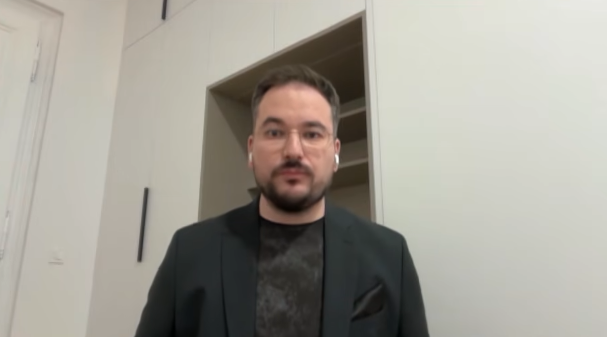
The fall of Aleksandar Vučić in Serbia has opened up a generational opportunity for Montenegro to strengthen itself politically and institutionally, but the domestic political scene, particularly the opposition, lacks the capacity to seize it - political analyst Aleksandar Musić said in an interview with Pobjeda. He believes that the Europe Now Movement and New Serbian Democracy have adapted best to the new circumstances, while, in his assessment, the biggest political losers are Dritan Abazović, Milan Knežević and Vladislav Dajković.
Musić believes that the Europe Now Movement has used the changes in Belgrade to take the initiative in raising the issue of Serbia’s political and media influence over Montenegro, despite having, as he claims, tolerated the activities of structures linked to the Serbian authorities in power at the time for years.
Commenting on their initiative to hold a parliamentary hearing on hybrid influence exercised through media outlets and companies close to the Serbian Progressive Party, Musić believes that Prime Minister Milojko Spajić is now taking advantage of political space that the opposition has failed to occupy.
- The Europe Now Movement is seizing the opportunity that has suddenly presented itself, moving into an open political space and framing its narrative in the context of Vučić’s downfall, because the opposition has failed to effectively put forward its own narrative, and failed to hold them accountable on this issue, despite having ample grounds to do so - Musić said.
He recalls the political developments following Montenegro's 2023 parliamentary elections, claiming that Spajić, under pressure from Vučić, brought the Serbian president's political allies at the time into the parliamentary majority and subsequently into the executive branch.
Musić believes that the Europe Now Movement avoided openly confronting Vučić's influence for years, while now attempting to portray itself as a victim of that very same political influence.
- And that is precisely why Spajić and the Europe Now Movement can now make political headway on this issue as well, doing what is known in politics as reframing the situation - in this case, presenting themselves as victims of Vučić and perhaps even gaining some political advantage from it in certain European capitals. They have an opportunity, and they are using it. Who is going to hold them accountable? Who is going to make them pay for it - Musić asked.
Opposition missed opportunities to respond politically to Belgrade’s influence
Musić is particularly critical of Montenegro's opposition, which, in his view, has failed over the past several years to give political expression to the dissatisfaction of some citizens over Serbia's influence on Montenegro's domestic affairs.
As examples of what he describes as interference from Belgrade, he cites the local elections in Nikšić in 2021 and 2025, the formation of the parliamentary majority in 2023, political developments in Podgorica in 2024, as well as the activities of certain media outlets and organisations that he associates with Vučić's regime.
In his assessment, all of these were opportunities for the opposition to attract new voters and build a stronger political response, but it failed to seize them.
- Vučić’s downfall is neither a blow nor a gift to the Montenegrin opposition, because it has long since become irrelevant to them what is happening in the reality around them, whether in Montenegro or in neighbouring countries - Musić said.
He believes that even the marking of 20 years since the restoration of Montenegrin independence, which, according to him, demonstrated strong public engagement and commitment to the state, was not used as an opportunity to forge political alliances and mobilise citizens.
He is particularly critical of the opposition for failing, as he puts it, to put key issues of national importance on the political agenda ahead of the 2027 elections, instead exhausting itself in debates over economic programmes.
„Mandić and Spajić are gaining, Knežević and Abazović are losing“
Discussing how political actors in Montenegro have adapted to the changes in Serbia, Musić believes that the New Serbian Democracy and the Europe Now Movement have benefited the most, while the Democratic Party of Socialists (DPS) and the European Alliance have failed to improve their positions.
In his view, Andrija Mandić is using the earlier deterioration in his relations with Vučić to present himself to international partners as a pro-European politician, while Spajić is attempting to establish himself as a political actor opposing hybrid influences.
- The New Serbian Democracy and the Europe Now Movement are benefiting because they adapted quickly; the Decmoratic Party of Socialists and European Alliance remain where they were, although they could have made significant gains. Democratic Montenegro is also in the same position, with limited prospects of moving closer to Serbia's new authorities, while Dritan Abazović, Milan Knežević and Vladislav Dajković are the absolute losers - Musić said.
He believes that Knežević has lost an important political support base in Belgrade and that his future role in government will largely depend on his relationship with Mandić.
As for Abazović, Musić believes that his attempt to move closer to Serbia's student movement came too late, recalling his earlier failure to publicly criticise Vučić's treatment of Montenegro and Serbian students.
He sees Vladislav Dajković's position in a similar light, believing that the change of power in Serbia has cost him a significant part of his political and media support.
New authorities in Serbia will not necessarily mean an end to pressure on Montenegro
Analysing the future relationship between Podgorica and Belgrade, Musić believes that some easing of political pressure on Montenegro can be expected initially, primarily because Serbia's new authorities will have domestic priorities to address.
He believes that reforms in the judiciary, police and media will be Serbia's main priorities, which could temporarily reduce the intensity of its engagement with Montenegrin affairs.
- Belgrade may adopt a somewhat more relaxed approach towards Montenegro for a short period, but not for reasons related to values or civilisation - rather, for logistical reasons - Musić said.
Nevertheless, he warns that issues concerning language, cultural autonomy and identity could remain an important part of future relations between the two countries.
He draws particular attention to the pro-European orientation of Serbia's new authorities, which, in his assessment, could enable them to pursue political influence in the region in a different way.
Musić believes that Mandić could also adapt to this political framework, interpreting his current pro-European rhetoric as a change in the way he conducts politics rather than necessarily a change in his long-term objectives.
Speaking about the Serbian Orthodox Church, he expects Metropolitan Joanikije Mićović and Bishop Metodije Ostojić to move closer again, working together with the aim of preserving the current government and strengthening Mandić's position.
Student List and new political dynamics
Commenting on contacts between the Europe Now Movement officials and representatives of the Student Electoral List in Serbia, Musić believes that certain political similarities make closer ties between them possible.
According to him, the Student List has a nominally pro-European orientation and takes a critical stance towards both Aleksandar Vučić and Milo Đukanović, creating room for communication with the Europe Now Movement.
However, he believes that some representatives of Serbia's emerging political scene have insufficient knowledge of Montenegro's domestic political dynamics, which could lead them to misjudge the role of certain domestic political actors.
Musić also believes that Mandić will seek to establish the closest possible relations with the new authorities in Belgrade, while some politicians who previously supported Vučić will attempt to adjust their public positions to the new circumstances.
Discussing the possibility of new political options emerging among Montenegro's Serb electorate, he focused in particular on Nikola Jovanović.
Although he believes there is room for an authentic Serb political option that would not be dependent on Belgrade, he assesses that Jovanović's new political initiative has so far failed to demonstrate sufficient organisational and communication capacity to make a serious entry onto the national political scene.
„Montenegro must stop depending on who is in power in Serbia“
Musić believes that the changes in Belgrade represent an opportunity Montenegro should use to strengthen its own institutions, political community and international alliances.
He identifies the United States, the United Kingdom, Germany, France, Austria, Slovenia and Croatia as particularly important partners, alongside the Montenegrin diaspora.
- It would also be useful to stop fantasising about the possibility that some representatives of the so-called Second Serbia, who account for a statistically negligible proportion of the population, will ever come to power in Serbia, and to understand that the only way to avoid depending on whoever is in power in Serbia is to strengthen Montenegro on multiple levels - Musić said.
In his assessment, such a shift requires stronger institutions, better-quality education, independent media, capable political elites and a long-term strategy for building international partnerships.
Otherwise, he warns, Montenegro could face further deepening of social divisions, external political pressure and an erosion of the substantive significance of its state independence.
Musić concludes that the biggest problem is the absence of a political structure capable of taking advantage of the circumstances that, in his view, have emerged as a result of the change of power in Serbia.
- The saddest thing about all of this is that Vučić’s downfall has opened up enormous space for Montenegro to strengthen itself - a generational opportunity - but there is no one to seize it - Musić said.
He believes that, without a serious change in the approach of Montenegro's political actors, this opportunity could be missed despite the more favourable regional circumstances.