


Gunnarsdóttir: I hope Montenegro and Iceland will sit at the EU table where decisions are made
Commenting on the possibility that new member states could be denied veto rights, Iceland’s foreign minister said that the country believes in rule-based cooperation and equal conditions, and that, together with Montenegro, she sees Iceland in 10 years as a country that, at the EU table, „should influence decisions affecting its citizens, rather than merely adopting them“

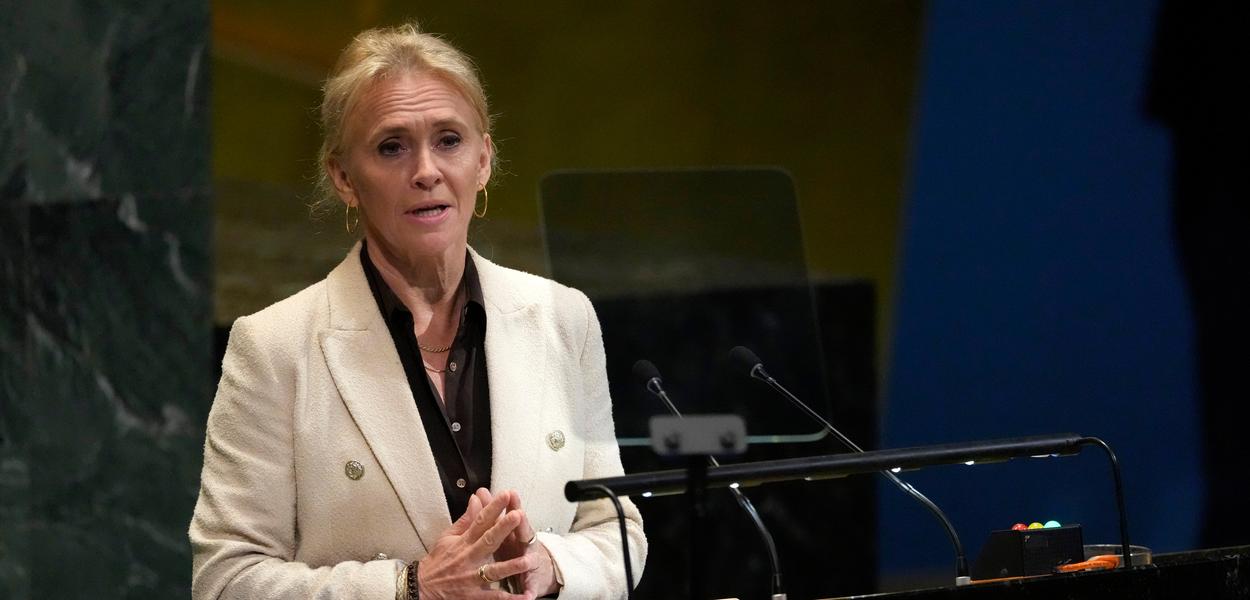
I have great respect for Montenegro’s accession path and for what your country has achieved. However, I want to be cautious. Iceland’s process will be shaped by the specific characteristics of our country, and the same applies to Montenegro - said Icelandic Foreign Minister Katrín Gunnarsdóttir in an interview with Pobjeda, responding to a question about whether the two countries could become rivals in the race for the 28th spot in the European Union, or instead part of a joint package that could potentially improve their chances of full membership and help overcome obstacles that would be more challenging individually.
Analyzing whether a parallel process could create additional momentum, Gunnarsdóttir noted that „this is a question for others“.
- Our task is to do the job and to do it well. Personally, I would be proud if Iceland could join the EU together with Montenegro in the near future - she said.
As a reminder, Iceland will hold a referendum on August 29 on whether to continue accession negotiations with the European Union.
Reykjavík withdrew from EU accession talks in 2013 after four years of negotiations, but rising living costs and the war in Ukraine in recent years have renewed the country’s interest in joining the bloc, according to surveys.
- Iceland and Montenegro share much in common: we are two small states, proud democracies, both NATO members, both committed to European integration - the Icelandic Foreign Minister told Pobjeda.
Speaking about potential rivalry between the two countries if Icelandic citizens decide to continue negotiations with Brussels, Gunnarsdóttir emphasized that the enlargement debate „is healthier when more countries progress at the same time“.
Asked where she sees Iceland and Montenegro in 10 years, she said she hopes both countries will be EU members, sitting at the table „where decisions affecting our citizens are made, instead of merely adopting them“.
- For Iceland, that would mean greater economic stability, a stronger voice in the Arctic, and deeper partnerships with European neighbors. For Montenegro, it would mean completing the path your country began many years ago and has pursued with real determination - she said.
She added that the world in ten years will be more, not less, competitive.
- Small states that are part of strong institutions will be in a better position than those standing alone. That is the choice before us, and I believe our two countries will make the right one - the Icelandic minister said.
Iceland wants equal membership
Referring to her earlier statement that „it is useful to have a voice at the table in Brussels“, Pobjeda asked Gunnarsdóttir how she views the possibility of new EU members being stripped of veto rights as a kind of safeguard mechanism.
- What I can say is that Iceland has always believed in cooperation based on rules and equal conditions, and any arrangement we would join would have to reflect that - she said.
However, she added that Reykjavík’s current focus is on a much more immediate issue: whether Icelanders even want to continue negotiations.
- The structure of decision-making within the EU for future members is a question for a later stage of a much longer process. I will not speculate on hypothetical institutional arrangements when the question before Icelandic voters on August 29 is simple: do they want to sit at the table and continue that conversation - Gunnarsdóttir said.
Last October, Brussels-based Politico, citing unofficial statements from three European diplomats and one EU official, reported that there is a proposal to change EU membership rules under which new members would not have veto rights, and could only gain them after the Union implements reforms.
Motives for continuing negotiations
The Icelandic Foreign Minister told Pobjeda that citizens of her country are facing real pressures – „a small currency that fuels inflation, high housing costs, and mortgage interest rates significantly higher than in Europe“.
According to her, this is one of the reasons that prompted the referendum on reviving the negotiation process.
- The question of whether we have the right tools to respond to these pressures is part of this debate. At the same time, the world has changed dramatically - she warned.
Asked whether security concerns are a trigger for renewing negotiations, she said that the international order, which has for decades underpinned their security and prosperity, is under serious pressure.
- Old alliances are being questioned. Trade is being used as a political weapon. Countries that once felt secure in their partnerships now have to rethink them - Gunnarsdóttir said, adding:
„In times like these, small states must carefully consider where they stand and who stands with them.“
She added that Iceland has always achieved more than might be expected given its size.
- We have done so by being strategically thoughtful, building strong partnerships, and having the courage to make big decisions when it matters most. The timing of this referendum is not accidental. It reflects the government’s belief that now is the right moment to give Icelanders the opportunity to make this decision themselves - she said.
Iceland could complete negotiations in a year and a half
Gunnarsdóttir said that the latest Gallup poll shows that 57 percent of Icelanders support holding a referendum on continuing EU accession negotiations.
- This percentage is growing. It represents a strong majority in favor of having this debate. And a clear majority answers yes to that question. The debate is open and the upcoming campaign is important, but the foundation of public support for this process is solid - she said.
She added that just over 30 percent are against, while 12 percent are neutral.
- If the Icelandic public votes YES, the real work will only then begin. Iceland had already opened 27 out of 33 negotiation chapters when talks were paused in 2013, and in the meantime we have continued aligning with EU legislation through the EEA. Therefore, if Iceland decides to continue negotiations, they could potentially be completed in as little as a year and a half, given how much EU legislation is already applied through Iceland’s EEA membership and participation in the Schengen area - she said.
However, Gunnarsdóttir remains cautious.
- There will also be challenging chapters. Fisheries is an obvious example. Iceland’s fishing sector is not only an important branch of the economy, it is part of our national identity and culture. It also raises real questions about control over key resources. My position is that we must enter negotiations prepared to strongly defend Iceland’s interests, and that it is possible to reach a good agreement - the minister said.
In conclusion, Gunnarsdóttir stated: „I would not be here advocating a YES vote in the referendum if I did not firmly believe in it“.