



Government rejects proposal to cut VAT on accommodation: „Budget would lose 40 million euros annually“

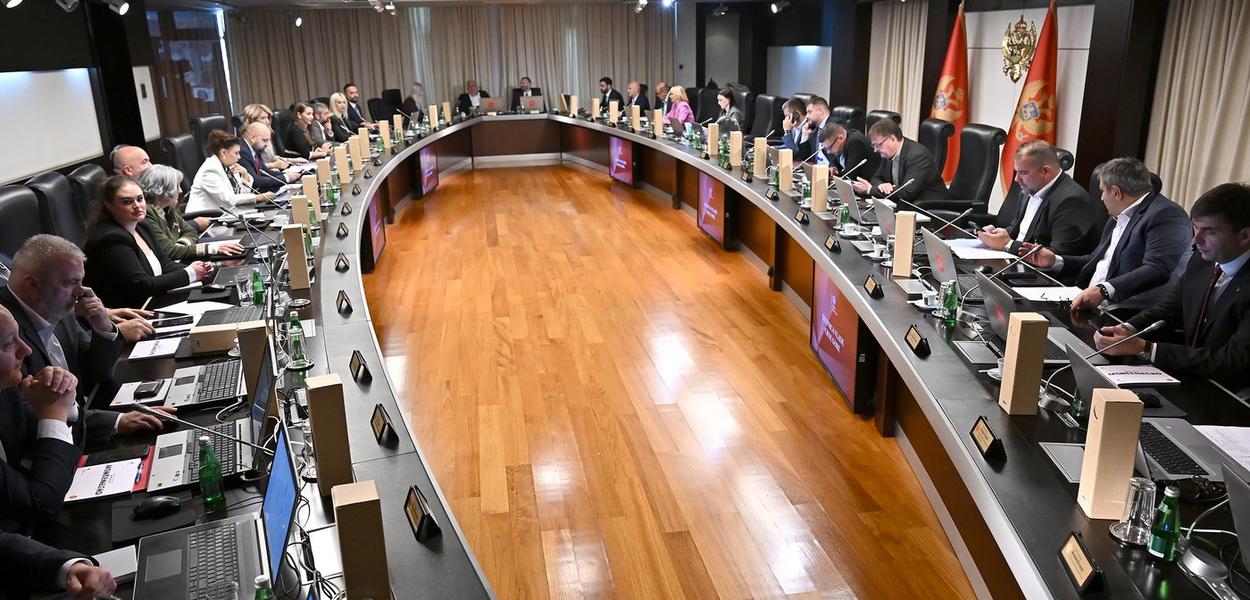
The Government of Montenegro has rejected the Draft Law on Amendments to the Law on Value Added Tax, submitted to the Parliament of Montenegro by European Alliance MPs Boris Mugoša, Branislav Nenezić and Nikola Zirojević. The proposed legislation seeks to reduce the VAT rate on accommodation services provided by hospitality establishments from the current 15 percent back to the previous rate of seven percent. In its opinion, adopted at yesterday’s session, the Government assessed that such a measure would cost the state budget approximately 40 million euros annually, while offering no guarantee that accommodation prices would fall.
The European Alliance previously stated that reducing VAT to seven percent would bring multiple benefits to all citizens of Montenegro, including the preservation of jobs, more stable revenues for the local economy and a more secure future for one of the country’s most important economic sectors. The party believes that the measure would ensure equal tax treatment for providers of comparable services, create room for more affordable accommodation prices and additional investment in the quality of the tourism offer, while also improving the competitiveness of Montenegrin tourism.
They also point to the importance of tourism for employment and the generation of direct and indirect revenues for the state and local budgets, as well as the fiscal and administrative challenges faced by businesses operating in this sector.
Regarding compliance with the European Union acquis, European Alliance MPs refer to Article 98 and Annex III, point 12, of Directive 2006/112/EC, arguing that the proposed solution makes use of the option to apply a reduced VAT rate to hotel and similar accommodation without introducing an additional reduced rate. The explanatory statement notes that no additional financial resources would be required to implement the law.
However, the Government maintains that there are no justifiable grounds for accepting the proposed amendment.
- The Ministry of Finance acknowledges the importance of tourism to Montenegro’s economic development, its contribution to employment, investment and overall economic activity, as well as the need to continuously improve the competitiveness of the tourism offer. However, an assessment of whether a change in the tax rate is justified cannot be based solely on the importance of a particular economic sector. It must also take into account the effects of the proposed measure on overall public revenues and the sustainability of the budget system, as well as the need to preserve the stability and predictability of the tax system - the Government stated in its opinion adopted at yesterday’s session.
The Government assesses that reducing the VAT rate on accommodation services from 15 to seven per cent would give service providers the opportunity to lower their prices, something that did not happen following previous VAT rate reductions. At the same time, however, it would undoubtedly reduce Montenegro’s budget revenues.
- In this regard, the fact that no additional budgetary funds are required to implement the proposed law does not mean that the proposed amendment has no fiscal impact, given that applying a lower tax rate would result in a significant loss of VAT revenue. Furthermore, any potential positive effects of the measure on increasing tourist traffic, lowering accommodation prices, investment activity and employment cannot be regarded as certain in advance, nor can it be concluded, without relevant indicators, that they would be sufficient to offset the resulting fiscal loss - the Government's opinion states.
According to estimates by the Ministry of Finance, based on available data on realised turnover, the VAT reduction would result in an annual revenue loss of approximately 40 million euros.
- Taking into account the aforementioned fiscal effects, as well as the uncertainty surrounding the extent of any potential positive economic effects, we believe that the proposed reduction in the tax rate is not sufficiently grounded in fiscal terms and that there are no justifiable reasons for adopting the proposed amendment - the Government assessed.
The Government also argues that the underlying assumption that a VAT rate reduction would lead to a proportional decrease in accommodation prices cannot be accepted as a certain outcome.
- The impact of a change in the tax rate on final prices depends on market conditions, the relationship between supply and demand, the business policies of service providers and other factors affecting price formation. Therefore, a reduction in the tax rate alone does not guarantee that the tax relief will be passed on to end users, meaning that it will result in lower accommodation prices and greater competitiveness of the tourism offer to the extent expected - the Government document states.
Regarding compliance with the European Union acquis, the Government notes that Article 98 of Council Directive 2006/112/EC, in conjunction with Annex III, point 12, allows Member States to apply a reduced VAT rate to hotel and similar accommodation. However, it emphasises that this provision does not impose an obligation to introduce or apply a specific reduced rate, but rather grants Member States discretion in this regard. Accordingly, the Government says, the current legislative framework is fully aligned with the European Union acquis.
- Therefore, the fact that the proposed solution is compatible with the European Union acquis does not, in itself, constitute sufficient grounds for its adoption, nor does it remove the obligation to assess its fiscal and economic consequences - the Government stated.
The Government also believes that frequent changes to tax rates can make long-term business planning more difficult, particularly in sectors involving multi-year investment cycles. Given that the current arrangement is the result of a previous review of the reduced VAT rate system, the Government considers that any potential change to the tax treatment of accommodation services should be based on an assessment of the results achieved under the current rate, its impact on the tourism industry and the generation of budget revenues.
- Taking all the above into consideration, the Ministry of Finance believes that the proposed reduction in the VAT rate on accommodation services from 15 to seven percent would cause a significant decrease in budget revenues which, given the uncertainty surrounding the extent of the expected positive economic effects, cannot be considered fiscally justified. Furthermore, taking into account the importance of stability and predictability in tax policy, we believe there are insufficiently justified grounds for changing the tax treatment of accommodation services again at this time. Any potential review of the current arrangement should be based on an assessment of its fiscal and economic effects, as well as possible alternative measures to support the tourism sector. We particularly emphasise that a potential reduction in the VAT rate on accommodation services provided by hospitality establishments would not guarantee lower prices for those services, but would undoubtedly have a negative impact on the revenue side of the budget - the Government concluded in its opinion.