



Belan: Criminalization of the media is unacceptable, Montenegro must be a country of free speech

Attempts to discredit and criminalize certain media outlets that report critically on the work of the government and state institutions marked the past media year in Montenegro, while pressure on independent journalism has further raised the question of the actual level of media freedom in a country aspiring to become the next member of the European Union.
From summoning journalists and editors for questioning to the public targeting of certain portals and attempts to politically label them, the environment in which the media operated showed how vulnerable the space for free and critical reporting still is.
For this very reason, the latest report by Freedom House, which continues to classify Montenegro among countries with partially free media, represents a serious warning that democratic standards in this area have not yet reached the level expected of a country on the European path.
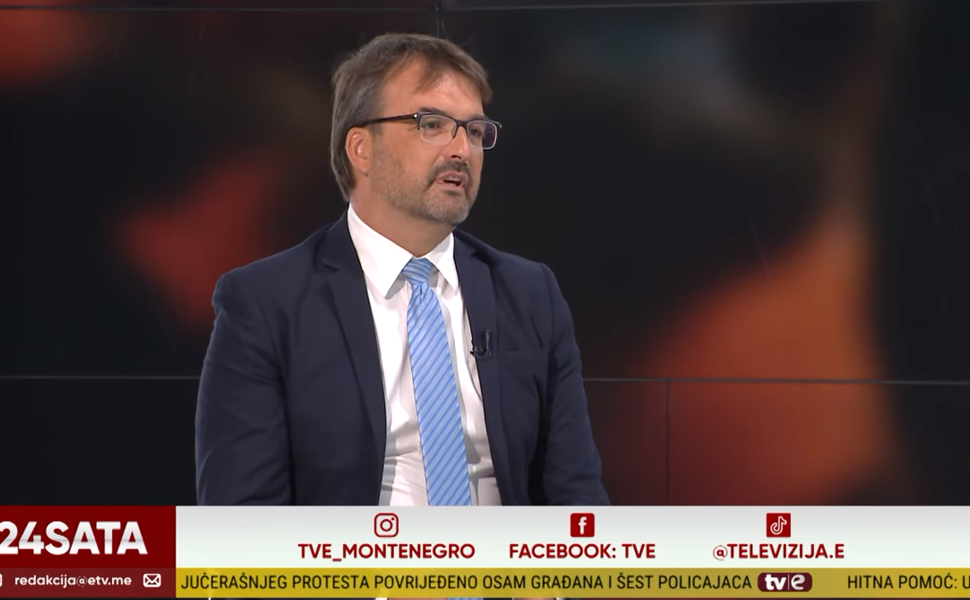
One of the leaders of the European Alliance, Vatroslav Belan, told Portal ETV that Montenegro must do much more to become a country with fully free media.
STRONGER PROTECTION FOR INDEPENDENT MEDIA NEEDED
Belan believes that special protection must be provided to media outlets that report critically on political and business centers of power.
- It is especially important to protect media that take a critical stance toward the Government, political and business power, as well as toward political and business elites, and to enable the media to report to citizens in a transparent and free manner on all issues important to our society, without fear of any consequences - said Belan.
ATTEMPTS AT PRESSURE AND CRIMINALIZATION
Speaking about the authorities’ attitude toward part of the media over the past year, Belan claims that there were attempts at pressure and criminalization.
- We know how, during the past year, the authorities tried to exert pressure on certain media that reported critically on the work of the Government and the parliamentary majority, by summoning them for questioning and linking them to certain criminal activities - Belan stated.
He adds that some situations were even absurd.
- There were also tragicomic situations in which the colors of certain portals were compared to the party colors of certain opposition parties, and even in that an attempt was made to find some kind of „offense“ - Belan said.
THE PUBLIC HAS THE RIGHT TO KNOW
According to him, Montenegro must not remain in the category of partially free countries when it comes to the media.
- A lot still needs to be done to change awareness, but also to limit the power of political elites, especially those in power, when it comes to their influence on independent journalism and independent media - Belan emphasized.
He stresses that the public has the right to know all information relevant to society and that no government should shape the media landscape according to its own political interests.
- The media must have the freedom to report on this, citizens must be able to assess the quality and accuracy of that information, while the state has no right to influence editorial policy or, if certain information does not suit it or could harm the ratings of political elites and parties, to exert any pressure or coercion on media editorial policy - Belan concluded.
At the end, Belan warned that it is unacceptable for Montenegro to continue to be recognized as a country with partially free media.
- The Freedom House report still places us in the group of countries with partially free media. It is regrettable that Montenegro, as a future member of the European Union, is still in certain categories grouped together with Western Balkan countries such as Bosnia and Herzegovina, North Macedonia, Kosovo, and Serbia when it comes to media freedom - Belan concluded.