



Public unable to verify where every sixth MP and cabinet member obtained their higher education
For 16 of the 81 current members of Montenegro’s Parliament, almost one in five, the biographies published on Parliament’s official website do not specify the faculty where they obtained their academic degree. These are: Anđela Vojinović, Artan Çobi, Bogdan Božović, Boris Bogdanović, Danijel Živković, Darko Dragović, Dejan Đurović, Dražen Petrić, Jelena Kljajević, Mehmed Zenka, Nermin Abdić, Nikola Rakočević, Nikola Rovčanin, Oskar Huter, Slađana Kaluđerović and Vaso Obradović - according to Kaluđerović

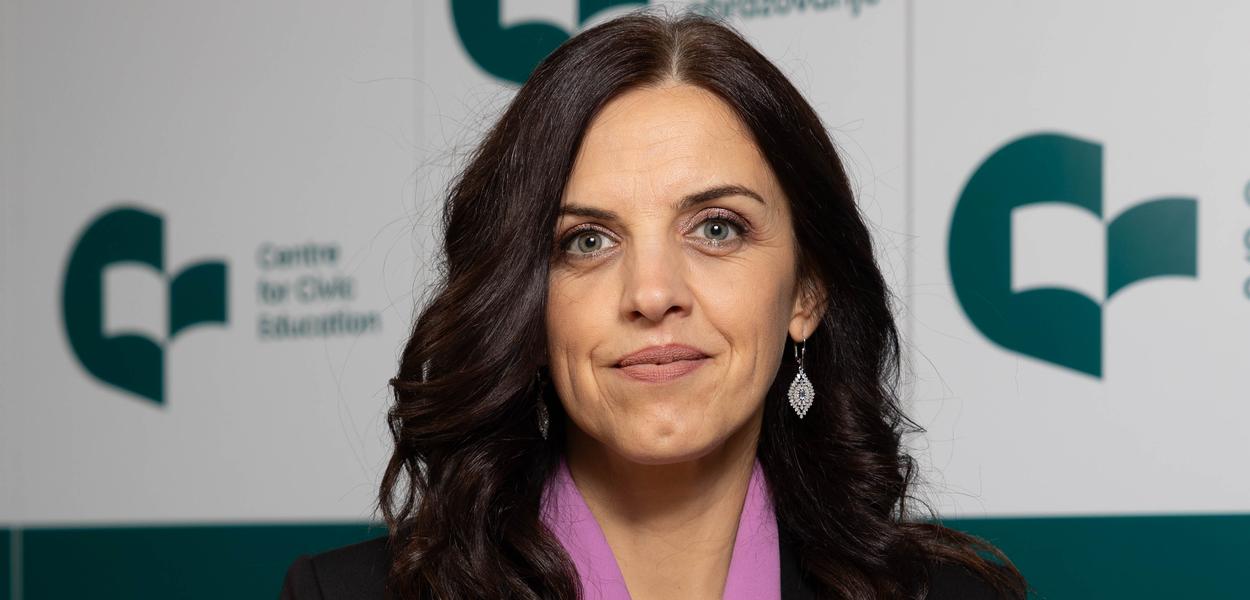
Senior Legal Adviser at the Centre for Civic Education (CCE), Snežana Kaluđerović, said the public is unable to verify where every sixth member of Parliament and Government obtained their higher education.
According to her, the CCE analysed publicly available information on the educational backgrounds of members of the Government of Montenegro and the Parliament of Montenegro and identified numerous gaps and omissions in official biographies. In many cases, basic information that would allow the public to verify the educational qualifications presented by holders of the country’s highest public offices is missing.
- Elected and appointed officials have very different educational backgrounds, ranging from PhDs and master’s degrees to undergraduate qualifications. However, there are also cases where biographies do not specify where a particular degree was obtained or whether the studies that were started were ever completed. Nearly two-thirds of MPs have undergraduate studies as the highest publicly confirmed level of education, while the Government has a higher proportion of members holding master’s and doctoral degrees - Kaluđerović said.
She stressed that Montenegro’s legislation does not require higher education as a prerequisite for serving as an MP, minister or prime minister.
- The composition of Parliament is determined by elections, while the Government is formed through political appointments, and the level of education is not a legal criterion. However, the public must have access to complete, accurate and verifiable biographies of those making decisions of public importance - she added.
Government reshuffle changed the line-up, but not the practice
According to Kaluđerović, a total of 41 individuals have served in Montenegro’s 44th Government from its formation until the latest reshuffle. This includes 29 members of the original Cabinet, eight ministers who were dismissed, and four new members appointed by Parliament on 23 July 2026.
- The current Government consists of 33 members. The reshuffle has somewhat reduced the number of unknowns regarding the educational backgrounds of Cabinet members, but the problem of transparency has not been resolved. At the same time, the fact that the biographies of some newly appointed ministers were not even provided to MPs before they voted on their appointments demonstrates the lack of a systematic approach to publishing basic information about candidates for the country’s highest offices - she said.
Of the current 33 Cabinet members, nine hold a master’s degree as their highest completed level of education: Milojko Spajić, Aleksa Bečić, Ervin Ibrahimović, Momo Koprivica, Novica Vuković, Maraš Dukaj, Simonida Kordić, Bojan Božović and Admir Šahmanović. Three members hold academic doctoral degrees: Budimir Aleksić, Filip Ivanović and Anđela Jakšić Stojanović.
- Vojislav Šimun, Tamara Vujović and Jelena Borovinić Bojović hold the professional title of Doctor of Medicine, awarded upon completion of integrated medical studies, which should not be equated with an academic PhD. Šimun and Borovinić Bojović are currently pursuing doctoral studies but have not yet completed them – Kaluđerović said.
Kaluđerović added that six members of the Government completed specialist or other postgraduate studies but did not obtain a corresponding postgraduate degree: Damjan Ćulafić, Majda Adžović, Fatmir Gjeka, Maida Gorčević, Ernad Suljević and Milutin Butorović.
- Ten Cabinet members have completed undergraduate studies, with no higher level of education publicly listed: Dragan Krapović, Danilo Šaranović, Naida Nišić, Damir Gutić, Filip Radulović, Slaven Radunović, Mirsad Azemović, Radoš Zečević, Zoran Jojić and Jovan Vučurović. Two cases stand apart from this classification. Nik Đeljošaj, Deputy Prime Minister for Economic Policy and Minister of Economic Development, graduated from a Higher Pedagogical School, which formally represents a lower level of education than a university degree. Meanwhile, the biography of Vladimir Joković, Minister of Agriculture, Forestry and Water Management, states only that he studied at the Faculty of Philosophy of the University of Montenegro, without indicating that he completed his studies - Kaluđerović said.
For four of the Government’s 33 members, or 12.1 per cent, the official biographies list an academic title or educational profile but do not specify the higher education institution where the qualification was obtained. According to the CCE’s Senior Legal Adviser, these are Naida Nišić, Slaven Radunović, Admir Šahmanović and Majda Adžović.
- Compared with the Government before the reshuffle, the share of members whose biographies do not identify the educational institution where they obtained their degree has fallen from 16.2 per cent to 12.1 per cent. Maja Vukićević, whose biography did not identify her faculty, was replaced by Radoš Zečević, whose biography states that he graduated from the Faculty of Law at the University of Montenegro. Dragoslav Šćekić, whose biography also omitted the name of his faculty, was succeeded by Zoran Jojić, whose biography lists the Faculty of Physical Education in Priština. Srđan Pavićević, who graduated from the Faculty of Medicine in Niš, was replaced by Jelena Borovinić Bojović, whose biography includes information on her completed university studies, specialist training and ongoing doctoral studies - Kaluđerović said.
Nearly one in five MPs have no faculty listed
The CCE analysis also covered all 98 MPs who have held parliamentary mandates during the current legislative term, including those whose mandates have since ended.
Kaluđerović said that information confirming some form of higher education was found for 96 individuals, while the available biographies of Mirko Đukić and Vesko Delić contained no information on either an academic qualification or the educational institution attended.
- For 16 of the current 81 MPs, almost one in five, the biographies published on Parliament’s website do not specify the faculty where they obtained their academic qualification. These are: Anđela Vojinović, Artan Çobi, Bogdan Božović, Boris Bogdanović, Danijel Živković, Darko Dragović, Dejan Đurović, Dražen Petrić, Jelena Kljajević, Mehmed Zenka, Nermin Abdić, Nikola Rakočević, Nikola Rovčanin, Oskar Huter, Slađana Kaluđerović and Vaso Obradović – Kaluđerović said.
In some cases, she noted, information about educational qualifications could only be found on political party websites or in media reports, even though it was absent from Parliament’s official website.
- According to publicly available information, among the current 81 MPs, nine hold academic doctoral degrees (Aleksandra Despotović, Dejan Đurović, Dritan Abazović, Nikola Milović, Vladimir Bakrač, Ivan Vuković, Elvir Zvrko, Ilir Çapuni and Uglješa Urošević), 19 have completed master's, specialist or equivalent postgraduate studies, while 53 have undergraduate or integrated university studies as their highest publicly confirmed level of education, including six with the professional title of Doctor of Medicine. This analysis also includes Jovan Vučurović, who has since left Parliament after being appointed minister - Kaluđerović said.
For six MPs whose mandates ended shortly after being confirmed (Nihad Canović, Mirko Đukić, Milutin Đukanović, Stevan Katić, Tihomir Dragaš and Vesko Delić) the Parliament’s website contains no information about their education.
Kaluđerović argued that the short duration of their parliamentary mandates cannot justify the absence of institutional records, pointing to the lack of a systematic obligation to publish complete biographies when candidates are nominated or immediately after they take office.
Education is not a requirement, transparency is
Kaluđerović pointed out that neither the Constitution of Montenegro, electoral legislation nor the regulations governing the work of the Government prescribe a specific level of education as a formal requirement for serving as an MP, minister or prime minister. The issue, she said, is not the level of formal education held by public officials, but the fact that in a significant number of cases the public is unable to verify where the qualifications presented were obtained.
- Taken together, the public is unable to fully verify the educational background of more than 17 per cent of holders of the country’s highest public offices, or slightly more than one in every six officials. Such practice is inconsistent with the principles of public accountability and with citizens’ right to have access to complete and verifiable information about those holding the highest state offices - Kaluđerović said.
She recalled that more than a year ago the CCE submitted an initiative to the Ministry of Education, Science and Innovation calling for the mandatory public disclosure of the higher education institutions from which Government members and MPs obtained their degrees. The Ministry has not responded to the proposal.
In the meantime, MPs Uglješa Urošević of the Europe Now Movement, a member of the ruling majority, and Ivan Vuković of the opposition Democratic Party of Socialists publicly launched an initiative urging MPs to publish copies of their university diplomas. The CCE welcomed the proposal but noted that it remained limited in scope and was not followed by any systemic measures.
- The CCE proposes the establishment of a single, easily searchable database of public officials’ biographies. Parliament and the Government should standardise the format in which biographies of elected and appointed officials are published, making it mandatory to include their academic qualification, faculty, university and the year the degree was obtained, while ensuring that this information is updated after every change in their composition - Kaluđerović added.
According to her, public trust in institutions begins with transparency.
- If the public cannot verify even the most basic information contained in the biographies of the country’s highest public officials, it is difficult to expect citizens to have full confidence in the accountability of the institutions they represent - Kaluđerović concluded.