



McAllister: The Russian Federation and Serbia use media, political, and religious channels to achieve their strategic objectives
He added that tools of influence include certain media outlets which, as he said, disseminate narratives aligned with Kremlin positions, portraying Montenegro as a „second Serbian state“, amplifying anti-NATO sentiment and legitimizing Russia’s geopolitical agenda

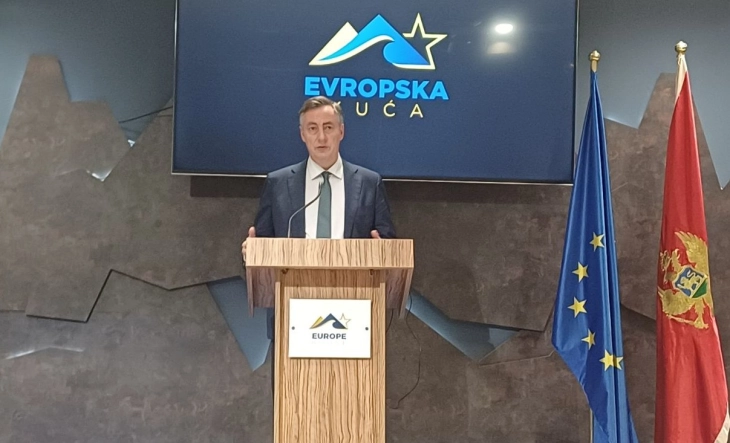
Montenegro has demonstrated its commitment to its European future through progress in closing negotiating chapters, said Chair of the European Parliament’s Committee on Foreign Affairs David McAllister, calling on all political actors to remain focused on implementing key reforms.
Speaking at a press conference in Podgorica, he stated that the European Parliament strongly supports Montenegro’s European path and recognizes its track record in the accession negotiation process.
- We continue to strongly support Montenegro’s path towards the European Union (EU) and recognize its track record as a frontrunner in the negotiation process - said McAllister, who is leading a Committee delegation on a visit to Montenegro.
He noted that the closing of several negotiating chapters at the end of last year, as well as one at the beginning of this year, clearly demonstrates the country’s commitment to its European perspective.
According to McAllister, the focus in the coming period must be on implementing reforms within the fundamental chapters, particularly in the area of the rule of law.
- This includes judicial reform, the appointment of judges, as well as a strong and credible response in the fight against corruption and organized crime, including deterrent sanctions and final convictions in high-level corruption cases - McAllister emphasized.
He stressed that adopting laws alone is not sufficient.
- The adoption of laws is not effective unless they are implemented in practice. The adopted reforms must be consistently and fully applied - McAllister said.
He noted that Montenegro is a valuable and loyal partner within NATO, but warned of concerns regarding external influences that could jeopardize the country’s European course.
- The Russian Federation and Serbia have developed a framework for activity and information manipulation, using media, political and religious channels to achieve their strategic objectives. These activities are aimed at undermining Montenegro’s Euro-Atlantic orientation and strengthening pro-Russian positions - McAllister stated.
He added that tools of influence include certain media outlets which, as he said, disseminate narratives aligned with Kremlin positions, portraying Montenegro as a „second Serbian state“, amplifying anti-NATO sentiment and legitimizing Russia’s geopolitical agenda.
According to McAllister, certain academics and other influential individuals have also served as intermediaries in shaping public opinion.
- We face this malign political influence in other countries as well, and Moldova is a positive example that a democratic society can be highly resilient. We stand with the people of Montenegro who wish to continue pursuing their European aspirations - McAllister said.
He stated that the European Parliament delegation’s visit sends a clear message of support for Montenegro on its path to EU membership.
- Our visit demonstrates the European Parliament’s strong support for Montenegro on its EU accession path. We see Montenegro in a European future that can deliver concrete and positive results. We want this positive momentum to continue and we will stand by you throughout this journey - McAllister said.
Responding to a question about whether security lapses and the escape of Miloš Medenica and former Special Prosecutor Lidija Mitrović could affect Montenegro’s reform path and EU accession process, McAllister said that progress in the areas of the rule of law, civil liberties, civil society and media freedom is particularly important, and that Montenegro faces numerous challenges.
He noted that the country has continued consolidating its constitutional and legislative framework within Cluster 1, which relates to the rule of law, democratic governance and fundamental rights, and that the positive report on the fulfillment of interim benchmarks for Chapters 23 and 24 confirms that Montenegro has made an important step forward in aligning its judicial and prosecutorial framework with European standards.
- However, according to the European Commission’s Rule of Law Report for last year, the implementation of these reforms remains slow and inconsistent - McAllister said, citing longstanding judicial vacancies, weak administrative capacities and the absence of final convictions in high-level corruption cases as the main problems.
Head of the EU Delegation to Montenegro, Johan Sattler, said that there are still „missing elements“ in the system, particularly regarding appointments in the judiciary and cooperation between law enforcement authorities and the courts.
- These missing elements need to be addressed in order to close Chapters 23 and 24, which are crucial for member states. Progress can be achieved, and now is the right moment to focus on these particularly demanding chapters - Sattler said.