



Constitutional Court to hold public hearing in September on mandatory vaccination as a requirement for kindergarten enrollment

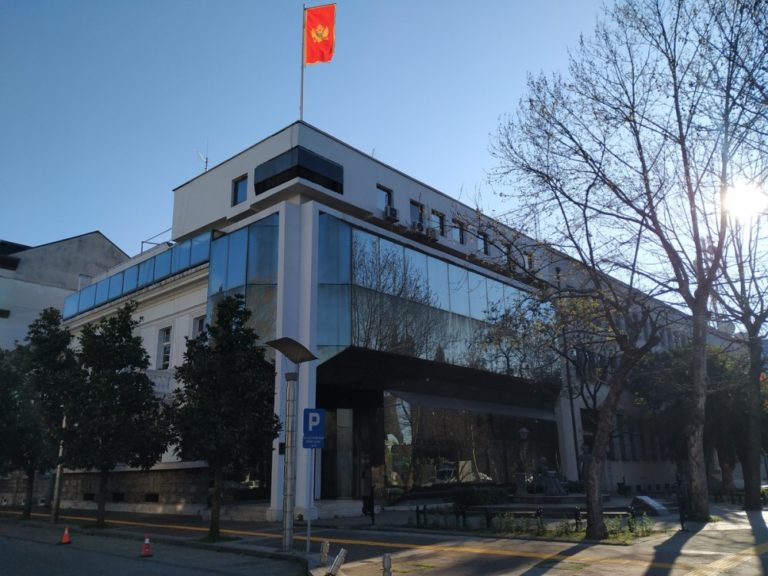
The Constitutional Court of Montenegro has unanimously decided to hold a public hearing in September as part of proceedings reviewing the constitutionality of the legal provision requiring mandatory childhood vaccination as a condition for attending kindergarten.
According to Danilo Ajković, spokesperson for the Constitutional Court of Montenegro, the Court has so far received three initiatives requesting a constitutional review of Articles 41 and 42 of the Law on the Protection of the Population from Communicable Diseases. These provisions stipulate that children may attend public and private preschool institutions only if they have received the mandatory vaccinations, except in cases where they have a permanent medical contraindication to a specific immunization.
- The Court will invite the applicants to the public hearing, including the non-governmental organizations Parents Association (Udruženje Roditelji) and Alternative Montenegro (Alternativa Crna Gora), as well as the individual applicant from Nikšić - Ajković said.
The applicants argue that the contested legal provisions are inconsistent with the Constitution of Montenegro and with ratified and published international treaties. Among other things, they claim that the provisions restrict children's access to preschool education and that such a limitation of human rights is disproportionate to the objective the legislation seeks to achieve.
The initiatives also request the introduction of an interim measure suspending the enforcement of individual decisions and actions taken pursuant to the disputed legal provisions until the Constitutional Court issues its final ruling, arguing that otherwise irreparable harm could be caused to children's rights.
Ajković said that representatives of the Parliament and the Government of Montenegro, including the Ministry of Health, will also be invited to participate in the public hearing.
- The Parliament of Montenegro has not submitted a response to the allegations contained in the initiatives, while the Government has provided an opinion stating that the contested legal provisions are not contrary to the Constitution - he said.
Given the significance of the issue and the fact that it simultaneously raises questions concerning the protection of public health, children's rights, the right to education, and the permissible limits of restricting human rights in order to protect the health of others, the Constitutional Court will also invite members of the professional community to participate in the hearing, Ajković said.
Representatives of the Institute of Public Health of Montenegro, UNICEF, and the World Health Organization (WHO), as well as independent experts in epidemiology, public health, children's rights, early childhood development, pedagogy, and preschool education, will be invited.
- The Court will request specific data from the competent institutions regarding childhood immunization coverage, the number of vaccinated and unvaccinated preschool-aged children, the number of children who were unable to enroll in or attend preschool institutions because they did not meet this requirement, as well as other relevant epidemiological data - Ajković stated.
According to him, the purpose of the public hearing is not to debate whether vaccination is right or wrong.
- The Constitutional Court's task is to determine whether the specific legal provision complies with the Constitution: whether the restriction imposed by the legislature pursues a legitimate aim, whether it is appropriate and necessary to achieve that aim, and ultimately whether a fair balance has been struck between protecting public health on the one hand and safeguarding the rights and best interests of the child on the other - Ajković said.
The Constitutional Court considers it necessary, before reaching a decision, to hear all relevant legal, medical, and epidemiological arguments, as well as expert opinions relating to children's rights, education, and development.
- The Court considers it particularly important to have access to concrete data on the actual scope and consequences of applying the contested legal provisions, as well as relevant international standards and comparative legal experience - Ajković emphasized.
He stressed that the Constitutional Court will decide an issue that has generated significant public debate solely on the basis of the Constitution, the facts, and expert arguments.
- The public hearing should ensure that all outstanding issues are fully examined and that the Constitutional Court's decision, whatever its outcome, is the result of a comprehensive assessment of all constitutional aspects of this complex issue, which is of exceptional importance to the public - Ajković concluded.